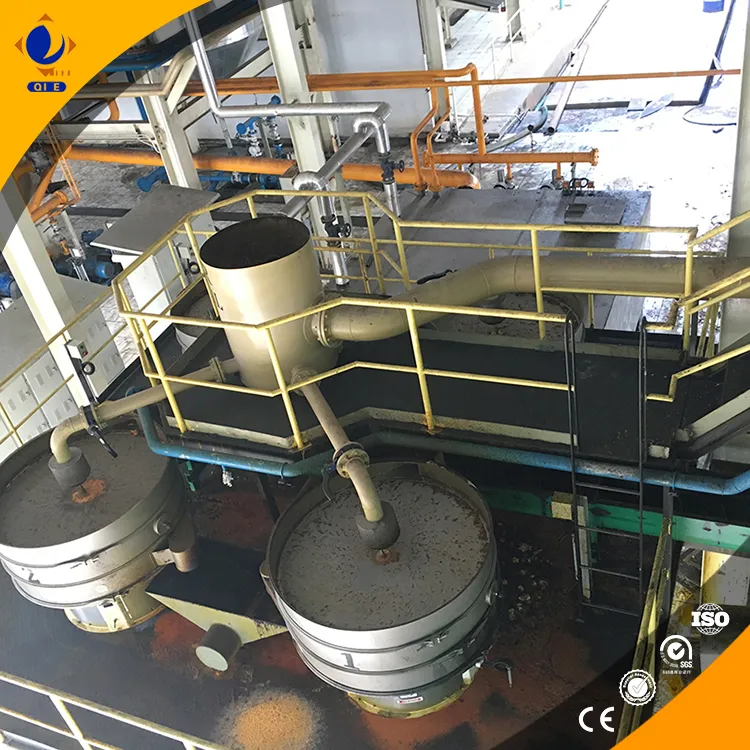
Why are you still relying on manual adjustment for your palm oil production line? In today's competitive landscape, leveraging intelligent automation is no longer a luxury but a necessity for palm oil producers, especially farmers and small - to - medium - sized processors. This article dives deep into how the PLC intelligent control system can revolutionize your palm oil production, bringing tangible benefits to your bottom line.
Think of the PLC system in your palm oil production line as the control center of your everyday household appliances. Just like how your smart thermostat can automatically adjust the temperature based on your settings and the environment, the PLC system continuously monitors various parameters of the palm oil production process. It can detect early signs of anomalies, much like how your refrigerator might alert you when the temperature is off.
For example, it can automatically monitor the flow rate, temperature, and pressure in the production line. If it detects a deviation from the optimal parameters, it can adjust them in real - time. This early anomaly identification is crucial as it allows you to address potential issues before they turn into major problems. In a real - world scenario, a palm oil processing plant that implemented the PLC system saw a 40% reduction in the frequency of manual intervention, which not only saved labor costs but also improved the overall stability of the production process.
One of the most significant benefits of using the PLC intelligent control system in palm oil production is energy savings. By automatically optimizing the parameters, the system can reduce energy consumption by more than 30%. Let's take a look at a real - life case. A medium - sized palm oil processing factory switched from manual control to the PLC system. Before the switch, their monthly energy bill was around $10,000. After implementing the PLC system, the energy bill dropped to less than $7,000, a savings of over 30%.
In addition to energy savings, the system also significantly reduces downtime. Manual control often leads to longer downtime when there are production line malfunctions. With the PLC system's automatic monitoring and early anomaly identification, downtime can be reduced by up to 50%. A small palm oil farm that adopted the system reported that their annual downtime was reduced from 20 days to just 10 days, which means more production days and higher profits.
The modular design of the PLC - based palm oil production system is another game - changer. It simplifies the installation and commissioning process. Unlike traditional systems that may take weeks or even months to install and debug, the modular design allows for a much faster setup. For instance, a new palm oil processing line with a modular design can be up and running in just two weeks, compared to the six - week installation time of a non - modular system. This not only shortens the time to market but also reduces the overall cost associated with installation and commissioning.
Based on our experience and real - world data, we've developed a 'Three - Element Control Logic' that can be easily replicated in different palm oil production scenarios.
By following this 'Three - Element Control Logic', palm oil producers can transition from 'passive maintenance' to 'active management', truly enhancing production efficiency and profit margins.
Are you ready to take your palm oil production to the next level? Download our Automation Transformation Self - Check List PDF to start your journey towards intelligent automation today!
 small scale palm oil processing
automated palm oil equipment
energy efficient oil extraction
modular palm oil production
food grade stainless steel in oil processing
palm oil production line automation
PLC control system
smart factory solutions
energy-efficient oil processing
industrial automation in agriculture
automated palm oil processing
small scale palm oil equipment
palm oil sterilization technology
fully automatic palm oil plant
palm oil production automation
palm oil production automation
PLC intelligent control system
palm oil efficiency improvement
energy saving in palm oil equipment
automation control key elements
grain and oil processing equipment maintenance cost
palm oil processing equipment warranty period
automated equipment energy efficiency
long-term operational cost reduction
food-grade stainless steel processing equipment
small scale palm oil processing
automated palm oil equipment
energy efficient oil extraction
modular palm oil production
food grade stainless steel in oil processing
palm oil production line automation
PLC control system
smart factory solutions
energy-efficient oil processing
industrial automation in agriculture
automated palm oil processing
small scale palm oil equipment
palm oil sterilization technology
fully automatic palm oil plant
palm oil production automation
palm oil production automation
PLC intelligent control system
palm oil efficiency improvement
energy saving in palm oil equipment
automation control key elements
grain and oil processing equipment maintenance cost
palm oil processing equipment warranty period
automated equipment energy efficiency
long-term operational cost reduction
food-grade stainless steel processing equipment








.png?x-oss-process=image/resize,h_100,m_lfit/format,webp)
.png?x-oss-process=image/resize,h_100,m_lfit/format,webp)
.png?x-oss-process=image/resize,h_100,m_lfit/format,webp)